Brought to you by

and

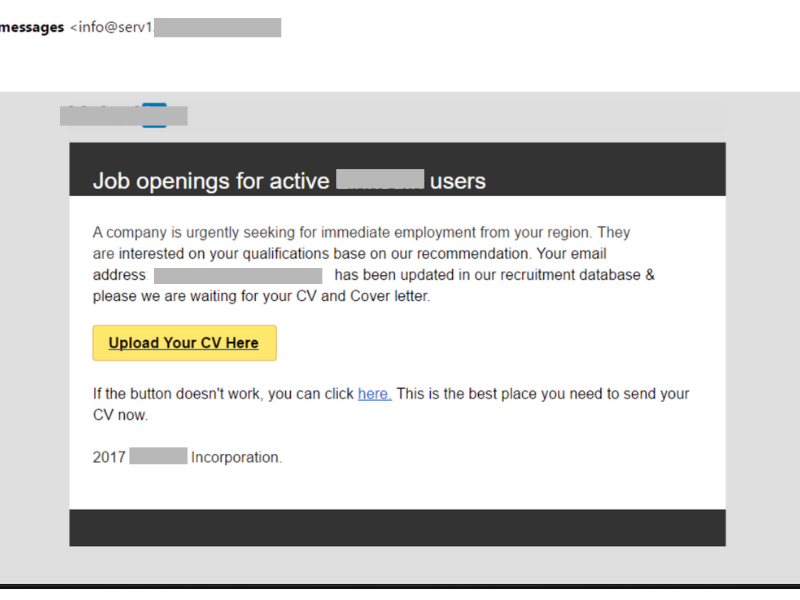
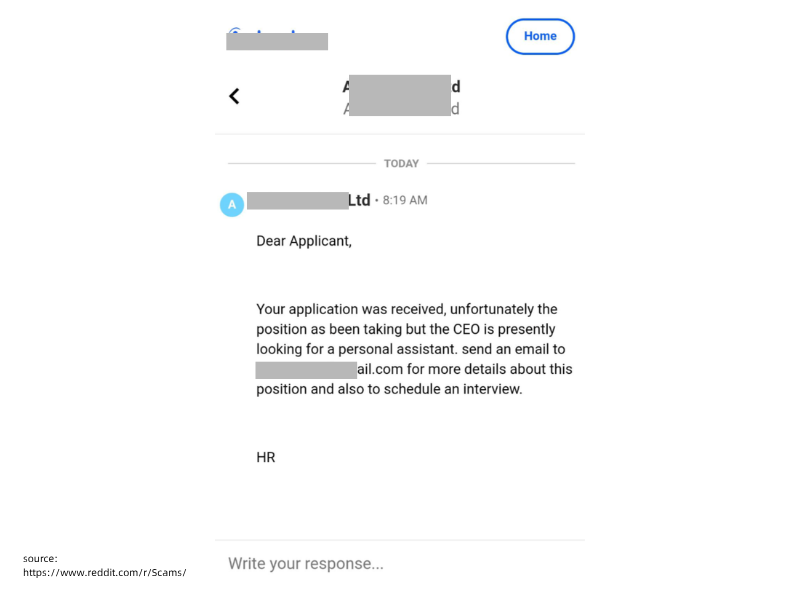
Employment Scam

What is an Employment Scam?

Employment scams are fraudulent job offers or opportunities designed to trick people into giving away money, personal information, or financial access, often by posing as legitimate employers or recruiters.

These scams heavily rely on low barrier-to-entry jobs that appeal to students, job seekers, those seeking to come to NZ from overseas or people wanting a flexible income.


Examples

What forms can Employment scams take?

  • Work-from-home scams – Promises of easy income for minimal work, often involving fake tasks or hidden fees
  • Fake recruiter outreach – Scammers contact candidates directly via email, Job listing sites, or personal messages with too-good-to-be-true offers
  • Payment processing / money mule roles – Jobs that involve moving money between accounts, often linked to fraud
  • Upfront payment scams – Victims are asked to pay for training, background checks, or equipment before starting
  • Fake contract or onboarding forms – Used to harvest sensitive personal or banking details that can be used for impersonation or sold on the Dark Web.
  • Working Holiday scams – The job may be legitimate, but it targets overseas applicants who are not familiar with NZ employment law. They are then paid incredibly low wages, often in cash, and have important items such as passports, documentation, etc., handed over to the employer as a “bond”

Stay Cybersmart

Tips to avoid Employment scams.

  • Research the employer thoroughly – Verify the company via its official website, check reviews, and confirm the role exists independently
  • Be wary of “too good to be true” offers – High pay for minimal work, fast hiring, or no interview process are major red flags
  • Watch for unusual communication methods – Be cautious if hiring is done only via messaging apps like WhatsApp or Telegram etc.
  • Trust your instincts and pause – If something feels off or rushed, take time to double-check before proceeding
  • Protect your personal information – Don’t share sensitive details (e.g. ID, bank info) early in the process or with unverified contacts
  • Avoid roles involving handling or transferring money – Especially if it’s not a clear, legitimate finance position

If you are a legitimate business advertising roles, don’t be mistaken for being a scam:

  • Control your brand presence online – Regularly monitor for fake job listings, impersonation profiles, and lookalike domains using your business name
  • Publish official hiring channels – Clearly list where you advertise roles (e.g. your website, trusted job boards) so candidates can verify legitimacy
  • Educate candidates and customers – Add a “We will never…” section on your careers page outlining how you communicate and what you won’t ask for

Need help?

Reach out to us, our local experts are here to help. 

Name