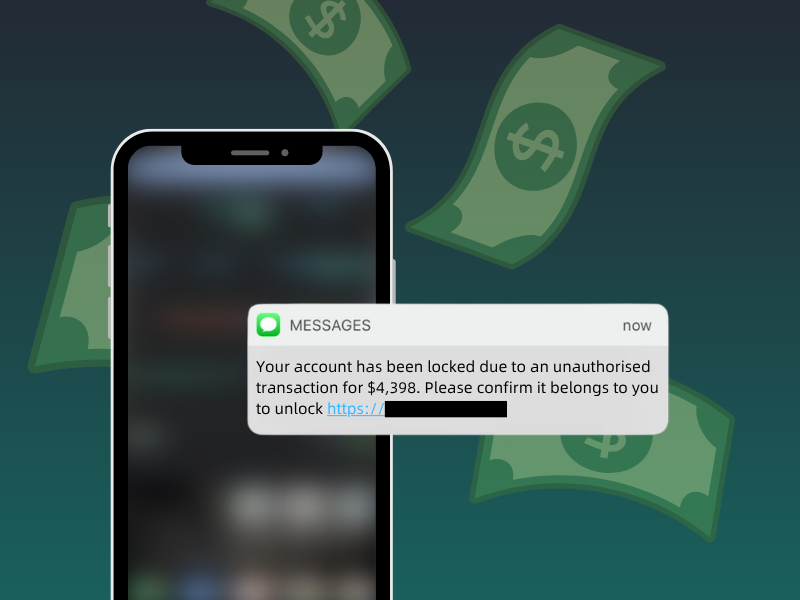
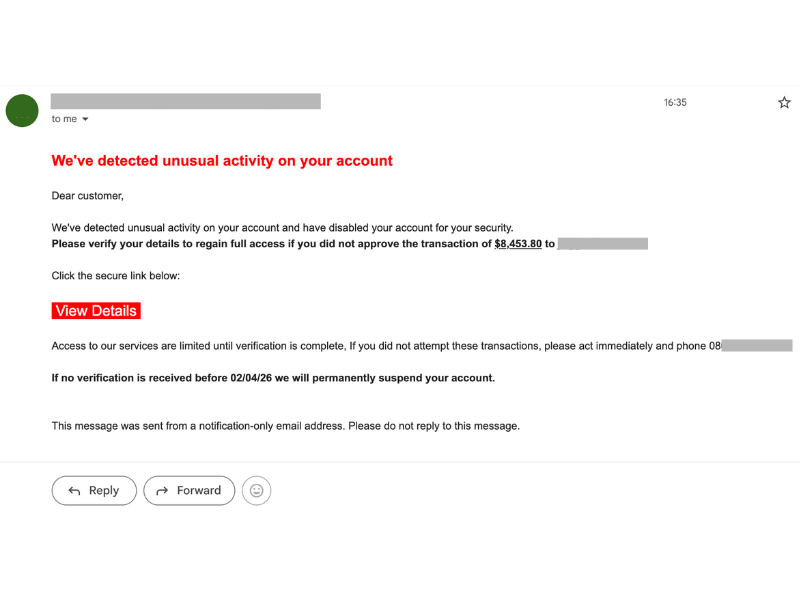
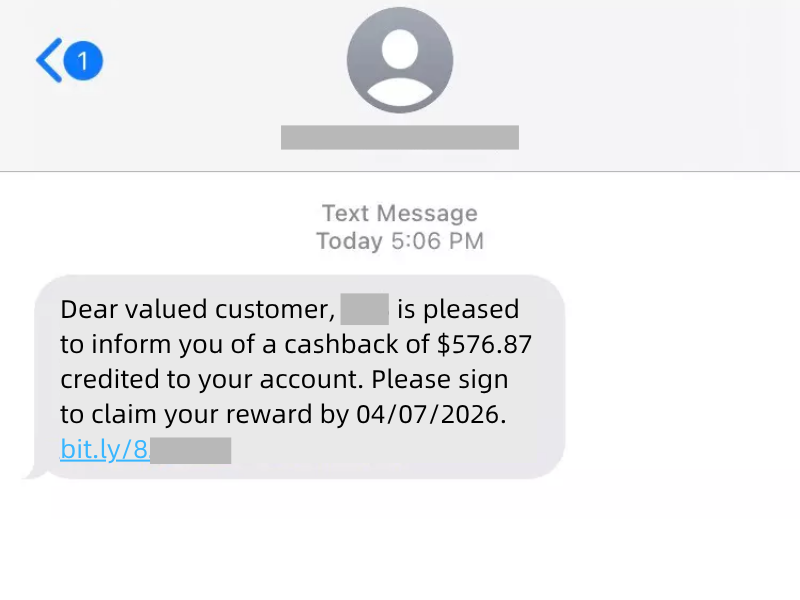
Banking fraud is when attackers pose as or spoof legitimate banks or organisations via phone, email, or text to trick you into revealing sensitive information, transferring money, or granting account access by creating a false sense of urgency or trust.

What forms can Banking Fraud take?
Tips to avoid banking fraud.
Legitimate banks follow strict security practices, they will:
Never ask for sensitive details like passwords, PINs, or one-time codes via email, SMS, or phone
Avoid creating urgency or pressure to make you act immediately or transfer funds
Direct you to official channels (their verified app, website, or branch) for any action
Use secure authentication methods, such as logging into your account or verified in-app notifications
Encourage you to verify communications, often advising you to contact them directly using official contact details
Make sure you’re not a target:
Verify the source – Don’t make or trust unexpected calls, texts, or emails. Contact your bank directly using official details from their website or app.
Never share sensitive information – Banks will not ask for passwords, PINs, or one-time codes. Treat any request for these as a red flag.
Avoid clicking suspicious links – Especially in urgent or unexpected messages; go directly to the official website instead. Look for spelling mistakes or poor grammar.
Take your time – Scammers rely on pressure and urgency. Pause and think before taking action.
Use security tools – Enable two-factor authentication, keep devices updated, and use reputable security software.
Protect your small business from Banking Fraud:
Use strong access controls – Enable MFA, limit user permissions, and restrict access to financial systems
Separate and approve payments – Require dual approval for transactions and avoid single-person control
Verify all payment changes – Independently confirm supplier bank detail changes or unusual requests
Train your team – Ensure staff can recognise phishing, scams, and impersonation attempts
Secure systems and monitor activity – Keep devices protected and updated, avoid public Wi-Fi, and regularly review transactions with alerts enabled
Be prepared to respond – Have a clear plan and act quickly if suspicious activity occurs
Reach out to us, our local experts are here to help.