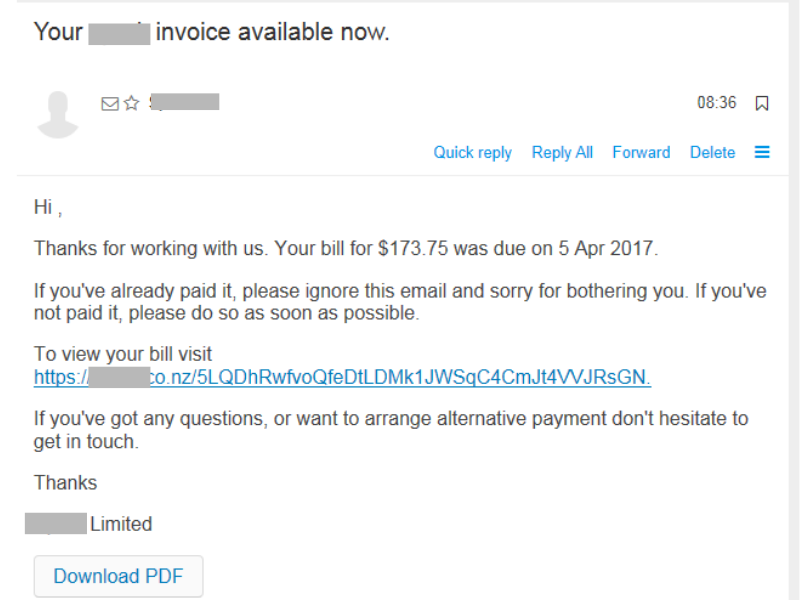
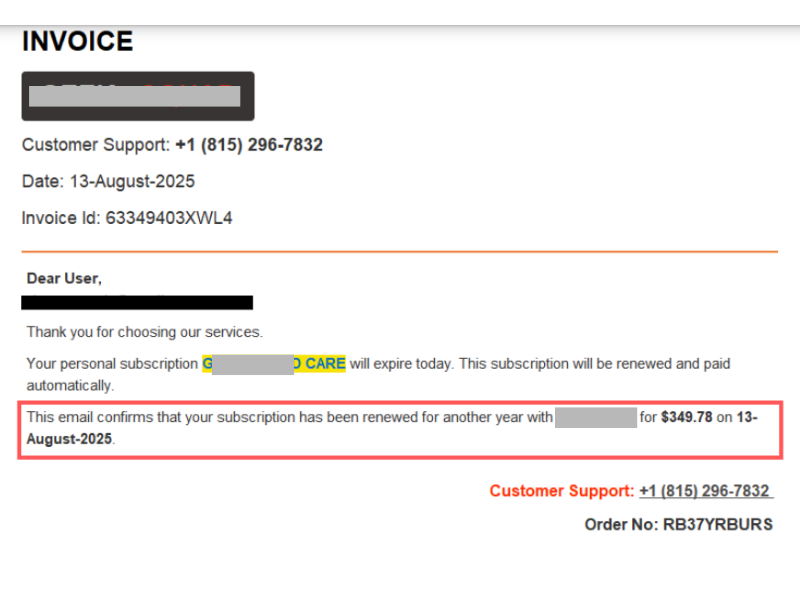
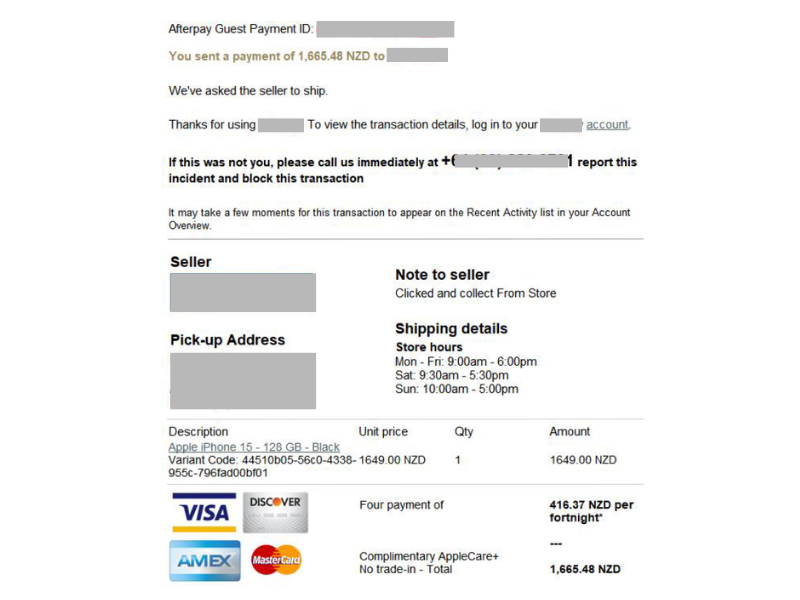
Fake invoice scams involve criminals sending or altering invoices to appear legitimate, tricking individuals or businesses into paying for goods or services that were never provided or into transferring funds to a fraudulent account.
Duplicate invoice scams – A second “reminder” invoice is sent with altered payment details
Fake invoices for real services – Invoices that look legitimate (e.g. utilities, subscriptions, office supplies) but are completely fabricated
Lookalike domain scams – Emails sent from domains nearly identical to real suppliers, making fake invoices appear authentic
Contractor or freelancer impersonation – Scammers pose as a known contractor and submit invoices with new bank details
Supplier payment redirection – A legitimate supplier’s bank details are changed (often via a compromised email), and payments are diverted to a scammer’s account
Business email compromise (BEC) – Attackers impersonate a CEO or finance manager requesting urgent payment of an invoice
Overpayment/refund scams – A fake overpayment is made, then a refund is requested before the original payment clears
Stay cybersmart
Tips to avoid Fake Invoice scams Individually and for Small Business
Verify payment details independently – Always confirm any new or changed bank details using a known, trusted contact (not the email or invoice itself)
Implement dual approval processes – Require at least two people to review and approve payments, especially for large or unusual invoices
Train staff to spot red flags – Urgency, last-minute changes, unusual requests, or slight email/domain variations
Check invoices carefully – Look for inconsistencies in bank details, formatting, wording, or supplier information
Secure email systems – Use strong passwords, enable MFA, and implement email authentication
Limit and control supplier changes – Have a formal process for updating vendor details with proper verification steps
Monitor accounts and transactions – Set up alerts and regularly review payments to catch suspicious activity early
Be cautious with urgent requests – Especially those claiming to come from executives or key suppliers, or giving a time limit for payment
Act quickly if something goes wrong – Contact your bank immediately and notify the affected supplier if fraud is suspected
Need help?
Reach out to us, our local experts are here to help.